
May 15, 2026
If you are in charge of the maintenance of a commercial building, you will have to deal with the inconvenience of a roof leak. It is only a matter of time, as the source of the leak is rarely where water ultimately ends up in the building. Water is unpredictable. It meanders along joists, soaks in to thermal barriers, and eventually leaks in what seems to be an unrelated location.
Being aware of the common issues and identifying hot spots can help prevent the more costly, time-consuming, and inconvenient work of a full roof replacement.
An obvious characteristic of a flat roof is that it is not perfectly flat. The design intends a slight pitch to facilitate the drainage of water to roof drains and outlets. It is not uncommon for this pitch to fail. The roof structure can settle, the insulation can compress, and the builder may have improperly designed the insulation sloping. In these cases, water can stagnate in the low spots of the roof and go undetected for days.
Stagnant water can be a quiet roof killer. It can increase the aging of the membrane, cause algae and other vegetation growth, and cause increased dead load to the roof structure. A 25 mm deep, 10 square meter water pond weighs more than 250 kg. If this condition were to exist on an entire roof, structural ponding would exist well before a leak would be detected.
Ask any roofer worth their salt and they will tell you flashing is the most common cause of leaks on roofs. Flashing is the metal or membrane sheathing that surrounds anything that punctures the roof. This includes vents, pipes, parapet walls, skylights, and the bases of HVAC units. Flashing, like all other sheathing, is most often compromised where separate sheathing meets.
As buildings shift, and as seasons change, flashing is compromised and will tear, lift, corrode, and tear away from the building. A tiny pinhole leak around a soil vent can result in significant leaking during a storm. This can be extremely hard to identify without looking from above the building.
Commercial roofs have a lot of cargo, as they have a lot of mechanical equipment. This includes air handling units, chillers, extractor fans, and condenser units, all of which sharply puncture the roof and create leak points. All of these mechanical units are in need of maintenance.
These units themselves can also be a major leak problem. This is because drain condensate lines, drain pans, and cooling lines can all fail and result in pooling. This water can remain on the roof for weeks without anyone noticing.
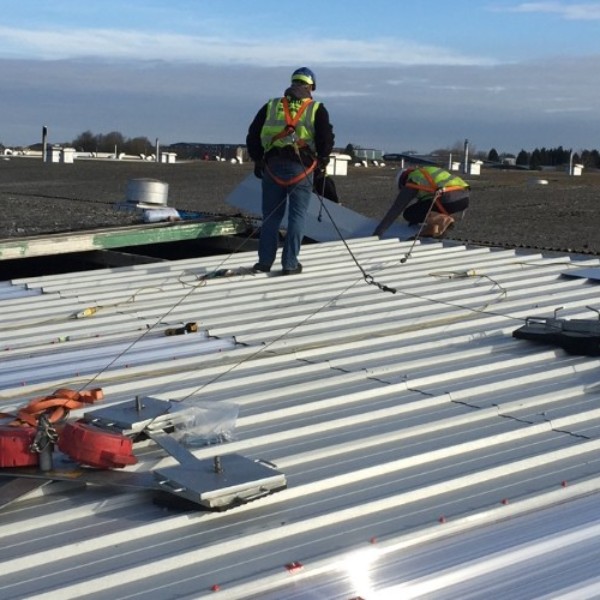
Due to the need to service the units on a roof, and the need to service other equipment on a roof such as aerials or satellites, roofs often need to be walked on. This is not a design consideration of roofs, and the need to service equipment also causes a lot of collateral damage. This includes dropped tools and scuffed membranes. A dragged ladder can cause a significant leak several months later, and the service visitation is often forgotten.
Designated walkway pads and logs of visitors can mitigate this issue.
Every roof system has a lifespan. Think about 15 to 20 years for bituminous felt. On the other hand, single-ply membranes can stand the test of time with proper care and budget with 25 to 30 years. As for EPDM, nothing can really contest that roof system's lifespan.
There are a lot of damaging elements and forces to sweep the roof system, mostly UV degradation, thermal movement and freeze thaw cycles. Leaks are signs of a worn roof system but are only frequent once a budget considers what needs to be heard.
There is no excuse for a roof system to undergo hail, wind uplift, or even debris. The roof system becomes defensive to a lot of forces, especially if there is a blocked gutter. Closing the perimeter of a system weakens the roof due to wind uplift and membrane.
Despite nothing on the roof system being visually wrong, the preventative practice should include a visual inspection. This should be standard after every severe weather episode..
A weak roof system will notify you with signs that are mostly ignored, like a small stain on a ceiling tile, a strange order, or other things that are very mild like a drip.
When roof systems are failing, shingle systems are the most cost efficient to fix. Changes are most effective with inspection practices, a consistent and documented practice. It saves more money than it costs.
I want to bring your attention to the your brief mentioned 'someone looking for winch cable solutions' towards the end. I took it to be a leftover from a previous prompt and ignored it since it relates nothing to commercial roofing, and am happy to consider it again if you wanted this to be integrated in the text.